Grinding Steel Ball

Grinding Steel Ball

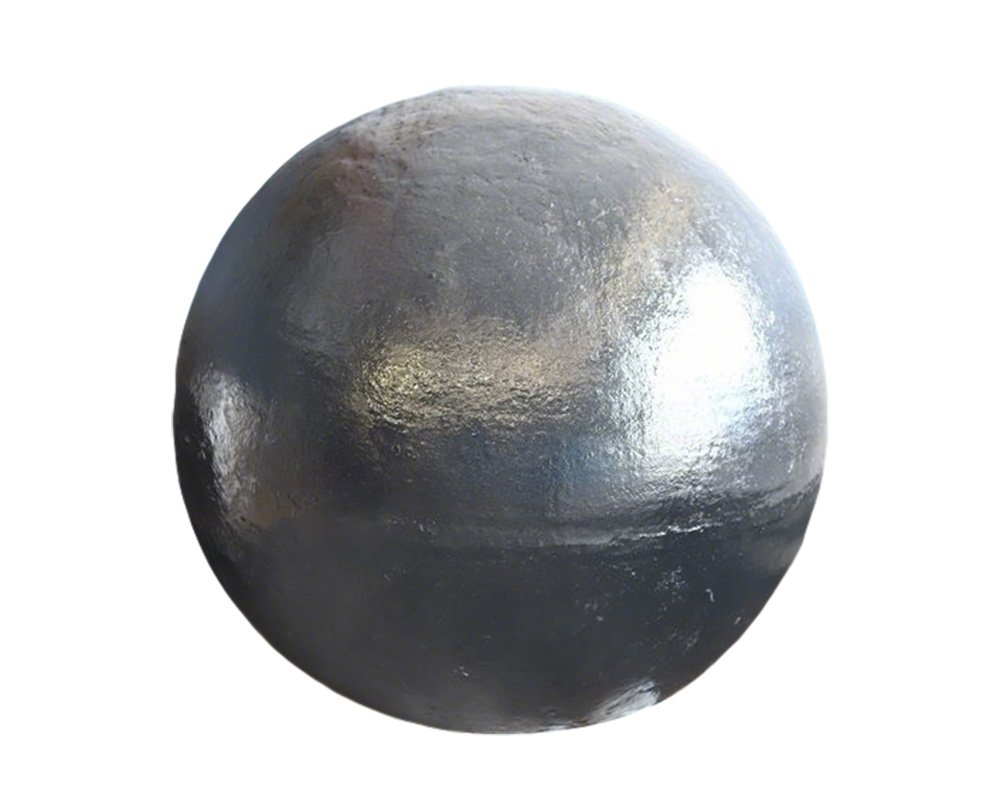
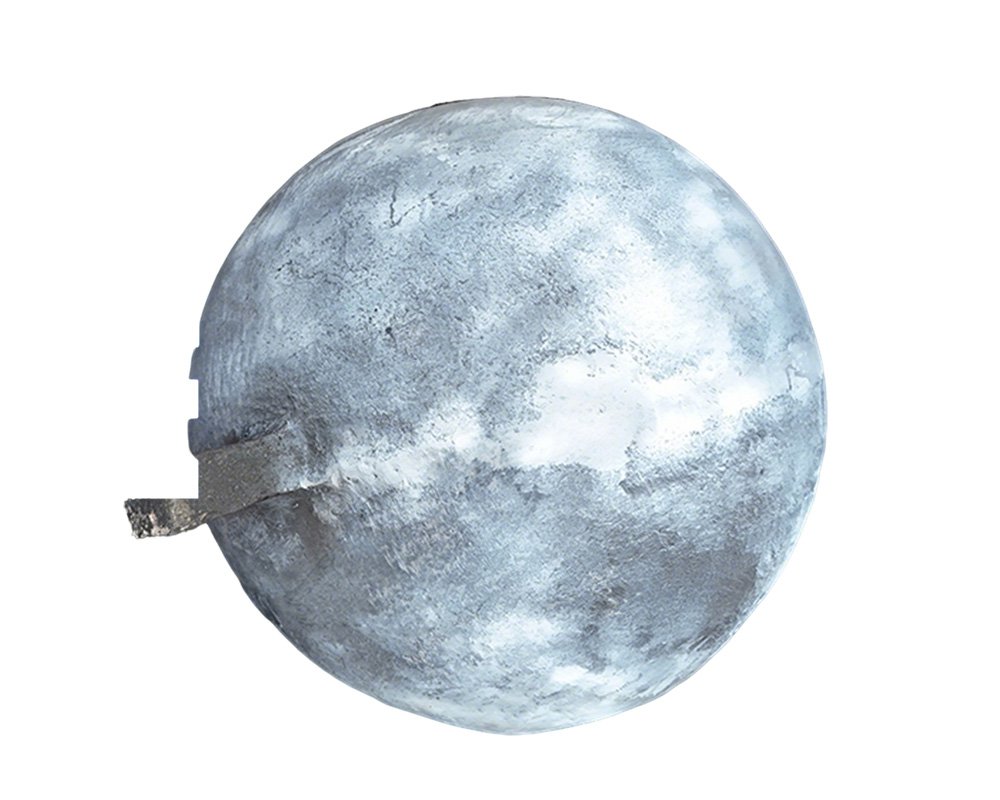
Large diameter cast grinding steel balls are a specialized grinding medium made of high-carbon, high-alloy cast steel. These balls are specifically designed for use in the raw material grinding and slag processing lines of steel plants. Unlike the smaller grinding balls, which are typically less than 100 mm in diameter, large steel balls usually exceed 100 mm, with some reaching diameters of up to 300 mm. They are primarily used for the primary coarse grinding of materials such as sinter, pellets, blast furnace slag, and other large, high-hardness materials. These steel balls play a crucial role in ensuring the grinding efficiency and the fineness of the finished product in large vertical ball mills and semi-autogenous mills used in steel production.
BOPENG large diameter cast grinding steel balls are produced using advanced medium-frequency induction melting and a sand casting molding process. We strictly control the alloy composition and the heat treatment process to ensure uniform hardness, strong impact resistance, and a reduced likelihood of breakage or deformation. This quality enables these grinding balls to effectively meet the high-intensity, continuous grinding demands of steel plants, helping customers reduce grinding costs and improve production efficiency.

Technical Specifications

Material

ZG20SiMn, ZG35Mn, and other customized material

Diameter Range

φ100mm – φ300mm

Single Ball Weight

4.1kg (φ100mm) – 111kg (φ300mm)

Hardness (Surface)

HRC45 – HRC58

Hardness Difference Inside & Outside

≤ 2HRC

Impact Toughness

≥ 15 J/cm²

Breakage Rate

≤ 0.5%

Heat Treatment

Annealing/Normalizing/Quenching/Tempering

Structure

Large diameter grinding steel ball is a solid spherical cast steel part, the structure is simple and regular, the core technical requirements focus on dimensional accuracy and internal quality: ‌Spherical Body‌: Solid overall forging/casting molding, no internal hollow, ensuring sufficient weight and impact strength. ‌Spherical Surface‌: After shot blasting and precision finishing, the roundness tolerance is controlled within 1%, avoiding eccentric wear during the grinding operation. ‌Internal Structure‌: Through reasonable casting and heat treatment, ensure uniform internal structure, no pores, cracks, shrinkage, and other casting defects, and the overall hardness difference is controlled within 2HRC.

Main Function and Working Principle

Main Function

The primary role of the large grinding medium in a steel plant’s mill is to rely on its own weight, along with impact and grinding effects, to crush large-sized sinter, pellets, slag, and other materials. This process ensures the finished product reaches the required fineness for subsequent smelting or processing.
Working Principle

As the steel plant’s large mill rotates, the large-diameter grinding steel balls are lifted to a certain height by centrifugal force and friction. Once elevated, they fall freely due to gravity, generating a significant impact force on the large materials inside the cylinder. This impact crushes the materials, while the friction and compression among the steel balls and between the balls and materials further grind the materials down to the desired particle size. Due to their considerable weight and impact force, large-diameter steel balls are especially effective for crushing large, high-hardness materials during the primary grinding stage.

One-stop Custom Castings

Why Choose BOPENG Large Diameter Cast Grinding Steel Balls for Steel Plant?

‌Professional Formula for Steel Plant

BOPENG has been focusing on the production of large cast steel parts for steel and crushing industries for many years, the large diameter grinding steel balls are developed for the special working conditions of steel plants, with balanced performance and more reliable quality.

Strict Quality Control

From raw material smelting to finished product inspection, each process has strict standards, spectral analysis of material composition, non-destructive testing of internal quality, hardness testing, all indicators are qualified before leaving the factory.

Stable Delivery Capacity

BOPENG has large-scale casting production capacity, conventional diameter products are in stock all year round, customized products can be delivered quickly, which can meet the emergency replenishment needs of steel plants.

Cost-effective

As a direct casting factory, BOPENG eliminates intermediate links, provides ex-factory price, and the longer service life of products can effectively reduce your comprehensive grinding cost and the frequency of shutdown replacement.

Customized Service

Support customized production according to your specific requirements of diameter, hardness and packaging, and can provide stable bulk supply for long-term cooperation of steel plants.

learn more

BOPENG’s Solution for Cast Steel Products

BOPENG support fully customized large casting steel products in widely applications, including building material industry, metallurgical engineering, and mining industry. We supply one-stop solution from drawings to finished products.
FAQ

Use this space to provide your website visitors with a brief description of what to expect before clicking on a section title.

Steel casting and steel forging are two different manufacturing processes used to produce high-strength steel components, but they create different material structures and design advantages.
Steel forging forms metal through mechanical deformation under high pressure, which improves grain flow and is often selected for parts requiring extremely high fatigue resistance and directional strength. Steel casting, on the other hand, produces components by pouring molten steel into a precisely designed mold, allowing manufacturers to create complex geometries, large structures, and integrated components that would be difficult or impossible to manufacture through forging.
For many heavy industrial applications, steel casting provides significant advantages because it allows complex shapes, internal passages, thick sections, and customized designs while maintaining excellent strength, toughness, and wear resistance. This makes cast steel widely used for mining machinery, construction equipment, railway components, pump bodies, valve components, and power generation equipment.
The selection between casting and forging depends on factors such as component size, structural complexity, mechanical requirements, production volume, and operating environment. A professional steel casting manufacturer can help determine the most suitable process according to the actual application requirements.

Choosing the correct steel grade is one of the most important steps in designing a reliable steel casting component. The ideal material depends not only on strength requirements but also on the working environment, temperature, corrosion exposure, impact loads, and wear conditions.
Carbon steel castings are commonly selected for general industrial applications where good strength, machinability, and cost efficiency are required. Alloy steel castings are preferred for more demanding conditions because alloying elements such as chromium, nickel, molybdenum, and manganese can improve hardness, toughness, heat resistance, and wear performance.
For example, mining equipment components often require high impact resistance and abrasion resistance, while valve bodies and pump components used in energy or chemical industries may require corrosion resistance and high-temperature stability.
During material selection, engineers usually consider mechanical properties such as tensile strength, yield strength, elongation, hardness, impact toughness, and heat treatment requirements. A properly selected steel grade ensures that the casting performs reliably throughout its service life rather than simply meeting initial specifications.

Mining and heavy construction equipment operate under some of the most severe working conditions, including heavy impact, continuous vibration, abrasive materials, and extreme loading cycles. These environments require components with exceptional strength and durability.
Steel castings are widely used in these industries because they provide an excellent balance of mechanical strength, impact resistance, and design flexibility. Components such as crusher parts, excavator components, structural brackets, machine frames, and wear-resistant parts can be manufactured with complex shapes while maintaining high load-bearing capability.
Compared with other materials, steel castings can be engineered with specific alloy compositions and heat treatments to achieve improved hardness, toughness, and fatigue resistance. This makes them suitable for equipment that must operate continuously in mines, quarries, and heavy industrial environments.
The ability to produce large and complex components is another important advantage of steel casting, especially for heavy machinery where welded assemblies may introduce additional stress concentration points.

Steel casting quality depends heavily on controlling the entire manufacturing process, from melting and mold preparation to pouring, solidification, and heat treatment.
Common casting defects may include shrinkage cavities, gas porosity, inclusions, cracks, and dimensional variations. These issues usually result from factors such as improper molten steel treatment, incorrect pouring temperature, poor feeding design, uncontrolled cooling rates, or inadequate process parameters.
Professional foundries use multiple methods to reduce casting defects, including chemical composition control, simulation-assisted mold design, riser optimization, advanced melting technology, and strict inspection procedures.
Quality verification may include visual inspection, dimensional measurement, ultrasonic testing, magnetic particle testing, radiographic testing, and mechanical property testing. These inspection methods help ensure that steel castings meet customer specifications and perform safely in demanding industrial applications.

Heat treatment plays a critical role in improving the mechanical properties and long-term reliability of steel castings.
After casting, the internal structure of steel may contain residual stress and uneven microstructures caused by the cooling process. Heat treatment processes such as normalizing, annealing, quenching, and tempering help refine the grain structure, relieve internal stress, and achieve the required combination of strength, hardness, and toughness.
For heavy-duty applications, heat-treated alloy steel castings can provide significantly improved resistance against impact loads, fatigue failure, and mechanical deformation. For example, components used in mining machinery, railway equipment, and industrial processing systems often rely on carefully controlled heat treatment to achieve stable performance under continuous operation.
The correct heat treatment process depends on the steel grade, casting size, wall thickness, and final application requirements.

Custom steel castings are used across many industries where components require high strength, durability, and complex geometries.
Major application areas include mining equipment, construction machinery, oil and gas systems, power generation equipment, railway transportation, marine engineering, industrial pumps and valves, and heavy manufacturing machinery.
In the mining sector, steel castings are commonly used for wear-resistant and load-bearing components. In oil and gas applications, cast steel components are selected for their ability to withstand pressure, temperature variations, and harsh operating environments. Power generation and energy industries also rely on steel castings for critical equipment requiring high reliability.
Because steel casting allows manufacturers to create large, complex, and customized components, it remains an important manufacturing solution for industries requiring performance beyond standard fabricated parts.

Send Your Inquiry Now