
Ball Mill Girth Gear
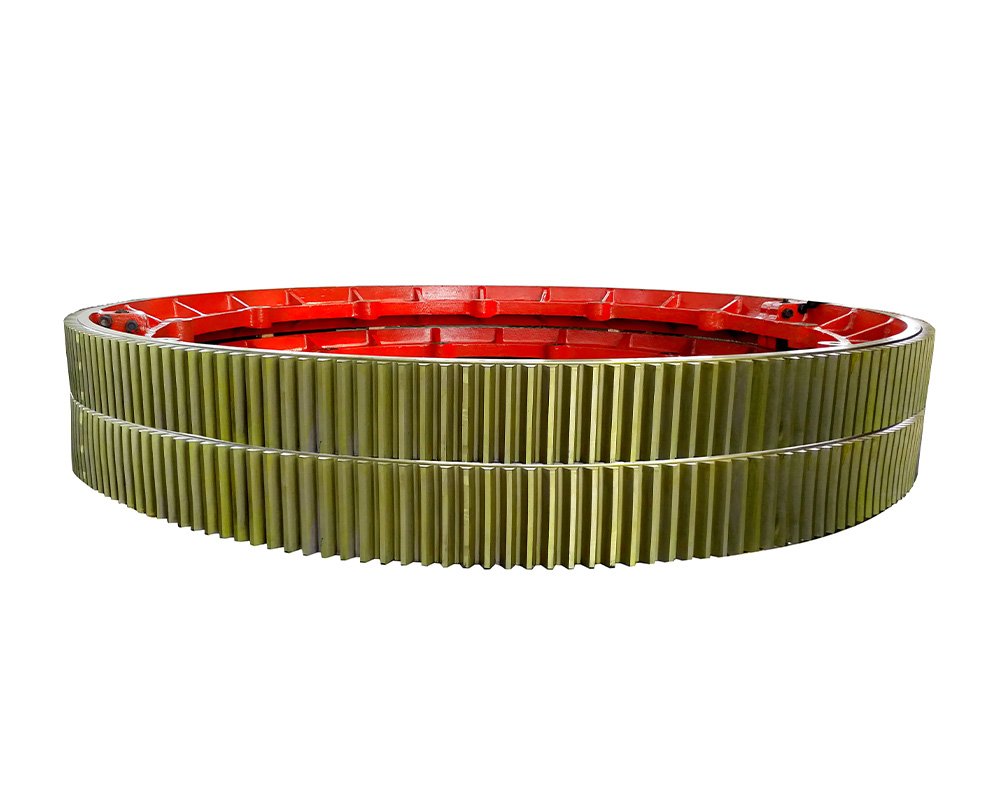
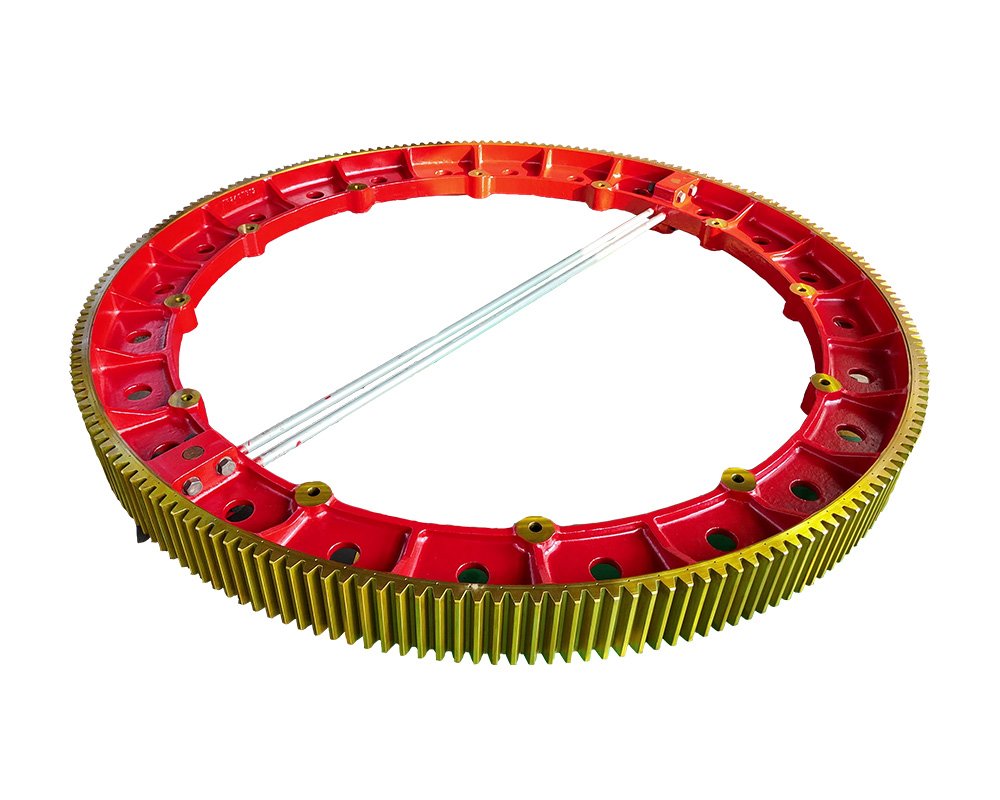
Ball Mill Girth Gear
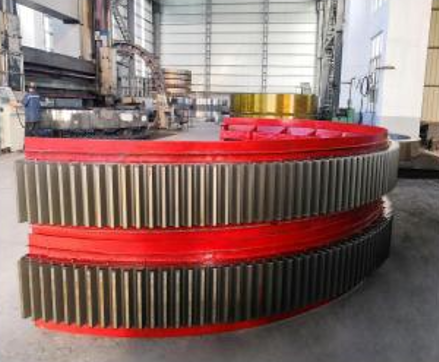
The ball mill girth gear is a kind of heavy-duty large gear, it is designed to provide the essential torque and motion necessary for the rotating machinery so that make it operate smoothly. BOPENG large girth gear is a critical transmission component in rotary kilns, ball mills, and other large rotating equipment, the gear ring is mounted on the cylindrical shell of a ball mill or rotary kiln and is driven by a motor via a pinion, ensuring efficient rotation and minimal vibration.
BOPENG cast steel girth gear is made from high-quality materials such as DIN EN 1563 certified cast steel (ZG42CrMo/ ZG32CrNiMo), the steel girth gear is engineered to meet the highest standards for durability and reliability. The design could minimizes vibration, increases the service life, and ensures optimal performance even under the most demanding conditions.
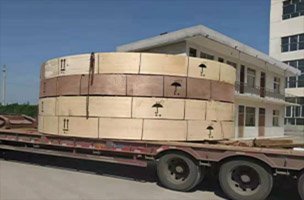
Additionally, BOPENG also supply segmented cast steel girth gears with on-site splicing technology, which can significantly reduce transportation costs by up to 60%, making it a cost-effective solution for large-scale projects. Our gear rings are custom-made to meet customer specifications and come with precise engineering tailored to each specific need. With a focus on seamless operation, longevity, and low maintenance, BOPENG large girth gears ensure the uninterrupted performance of your rotary equipment, whether it’s for cement production, mineral processing, or power generation.
Specifications
|
Product name |
Ball mill girth gear / Large girth gear |
|---|---|
|
Material |
ZG310-570, ZG42CrMo, ZG45CrMo, ZG32CrNiMo, ZG40CrNiMo, other customized materials |
|
Diameter |
Fully customized |
|
Weight |
>1 ton |
|
Module/Tooth Size&Number |
Fully customized |
|
Tooth Profile |
Spur gear / Helical gear |
|
Heat treatment method |
Annealing, normalizing, quenching, or tempering |
|
Certification |
ISO9001 |
|
Application |
Steel industry, Cement industry, Sponge iron plants, Mining industry, Electric powder, and other industry |
Materials Used for BOPENG Girth Gear
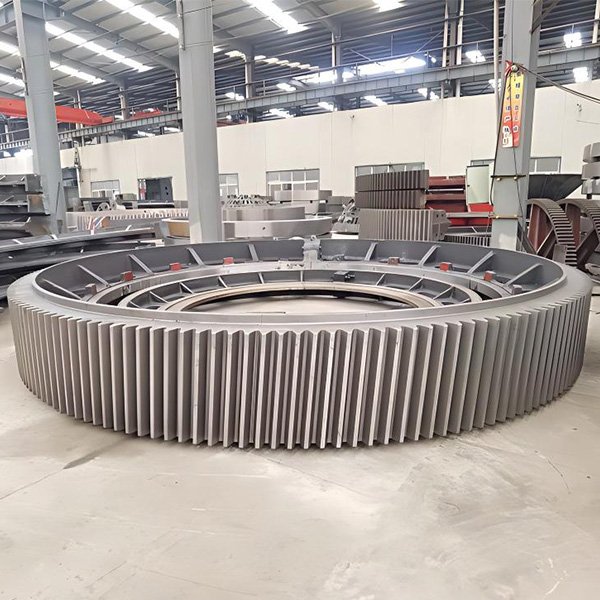
Working principle
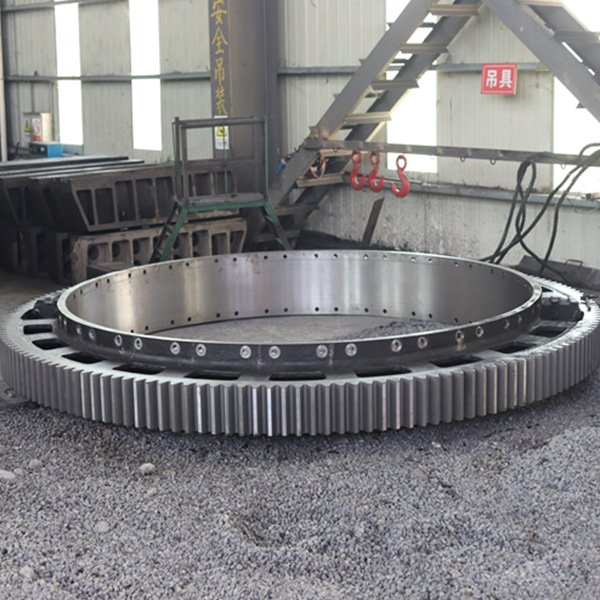
|
Comparison Item |
Spur Gears |
Helical Gears |
|---|---|---|
|
Product appearance |
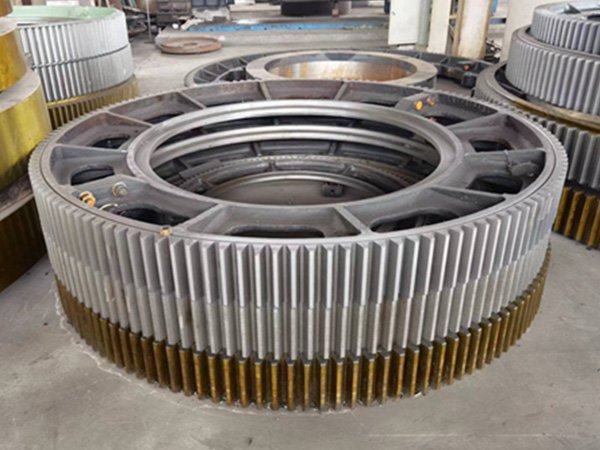 |
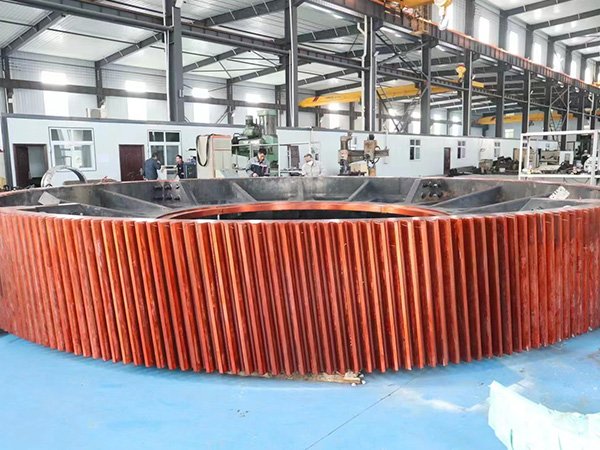 |
|
Meshing Smoothness and Noise |
The teeth engage and disengage simultaneously across the entire width, causing high impact, significant vibration, and increased noise. As a result, they are not ideal for high-speed or precision applications. |
With diagonal contact lines on the tooth surfaces, helical gears mesh gradually, providing smoother transmission, lower impact, and reduced noise levels (up to 5–10 dB). They are particularly suitable for ball mills, where smooth operation is critical. |
|
Load-Bearing Capacity and Service Life |
Spur gears feature a simple structure with high root strength, making them durable and ideal for light-load or open-gear systems. However, the load per unit of tooth surface is higher due to the low number of teeth engaged at once (usually one pair). |
With a higher contact ratio (2–3 teeth engaged simultaneously, compared to 1–2 for spur gears), helical gears distribute the load more evenly, reducing stress on individual teeth by 20–40%. This results in superior load-bearing capacity and longer service life. |
|
Axial Forces and Structural Complexity |
Spur gears do not generate axial forces, meaning they have minimal bearing loads, simple structure, and low maintenance requirements. |
The helix angle generates axial thrust, requiring thrust bearings or angular contact bearings. This adds to the structural complexity and manufacturing costs. The helix angle, typically between 8° and 25°, enhances meshing smoothness but increases axial force. |
|
Manufacturing and Cost |
Spur gears are simple to manufacture and reverse-engineer, making them cost-effective. They are well-suited for low-speed, heavy-load conditions or budget-conscious projects (e.g., in mining and metallurgy). |
Manufacturing helical gears is more complex and costly due to the specialized cutting tools and precise machining required. However, they offer superior performance, making them ideal for high-speed, high-precision applications, such as continuous operation in ball mills. |
|
Selection Recommendations for Ball Mill Applications |
Best for low-speed, heavy-load applications with high impact forces, such as traditional mining ball mills, where durability and cost-effectiveness are prioritized. |
Ideal for medium-to-high-speed ball mill applications requiring low noise, high operational stability, and long service life, such as continuous production in the cement and chemical industries, with a focus on efficiency. |
Quality Control and Inspection
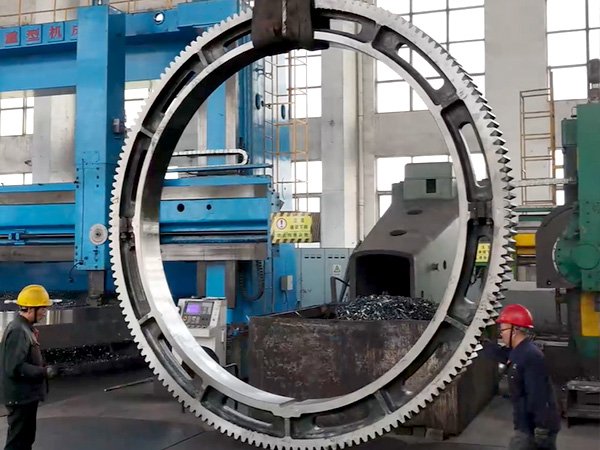
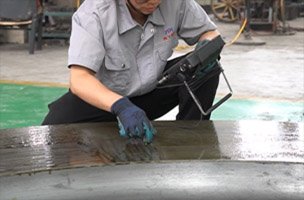
2.Tooth Profile — The alignment of the actual tooth surface with the theoretical involute curve.
3.Lead — Variation in the helix angle along the width of the gear face.
4.Pitch — Errors in individual pitch and the cumulative deviation in pitch.
5.Run Out — The deviation of radial eccentricity between the gear ring and its axis of rotation.
6.Span — The difference between the measured base tangent length and its theoretical value.
Why Choose BOPENG Casting?
BOPENG’s girth gear enable your mills and kilns to deliver their full performance
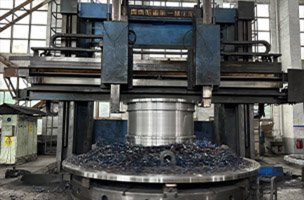
BOPENG possesses 20 years of experience in the production of cast steel gear rings, and continuously upgrading our manufacturing techniques and optimizing our service systems. We employ advanced manufacturing processes to produce ring gears that are high in strength, wear-resistant, and have a long service life. We have a team of experienced engineers who use the latest modeling software to design and manufacture ring gears to your specifications.
Customized Machining Capabilities for Large Gear Rings
1. With diameters reaching up to 15m and widths up to 2m, our girth gears meet 90% of global demand for ball mill and rotary kiln applications, capable of handling heavy-duty loads in both the cement and mining industries.
2. Manufactured in strict compliance with DIN 3962, our Class 6 gears outperform the industry-standard Class 10, with hardness levels reaching 320-360 BHN for enhanced durability and performance.
3. We offer both spur and helical girth gears, as well as double helical options, with segmented and integral designs to address transportation and installation challenges, ensuring a seamless fit for diverse operational needs.
BOPENG insists on using high-quality raw materials and adheres to strict quality control procedures
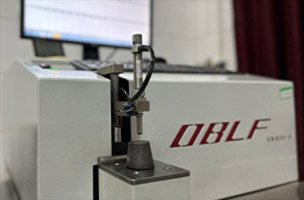
We consistently prioritize the procurement of high-quality steel raw materials, establishing close cooperative relationships with premium suppliers. Furthermore, we conduct a comprehensive series of compositional analyses on these materials to ensure they meet all requisite quality standards. Concurrently, our quality control measures are integrated throughout the entire production lifecycle—from mold making and casting to precision finishing—with dedicated quality inspectors overseeing product quality at every stage. BOPENG equipped with a diverse array of product testing instruments, and all our products have successfully obtained ISO quality system certification.
Reliable service and after-sales support, with established partnerships with numerous renowned global enterprises
BOPENG offers 24/7 online consultation services. Our professional international trade team is dedicated to assisting you with any issues that may arise during the cross-border procurement process, while our technical team stands ready to help you resolve any challenges encountered during product design, installation, and operation. Relying on high-quality cast steel products and a comprehensive service system, BOPENG has earned widespread recognition from clients worldwide, establishing cooperative relationships with renowned enterprises such as Mesto, SMS, POSCO, and Lafarge.
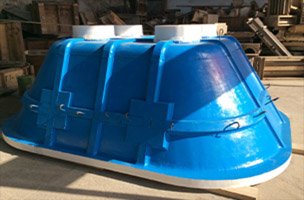
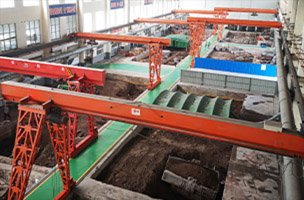
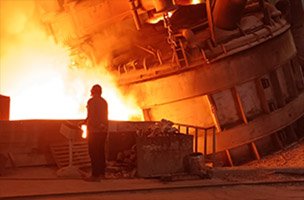
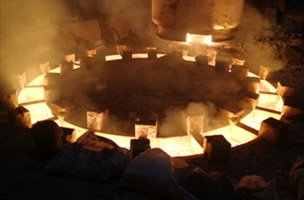
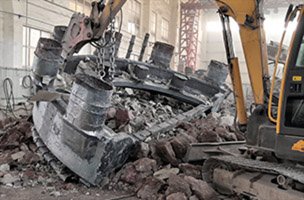
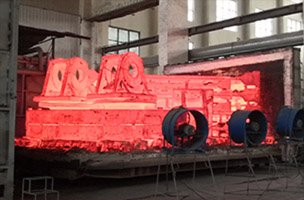
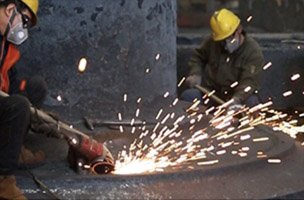
Production process
BOPENG’s Solution for Cast Steel Products
BOPENG support fully customized large casting steel products in widely applications, including building material industry, metallurgical engineering, and mining industry. We supply one-stop solution from drawings to finished products.
FAQ
Use this space to provide your website visitors with a brief description of what to expect before clicking on a section title.