
Rotary Kiln Tyre
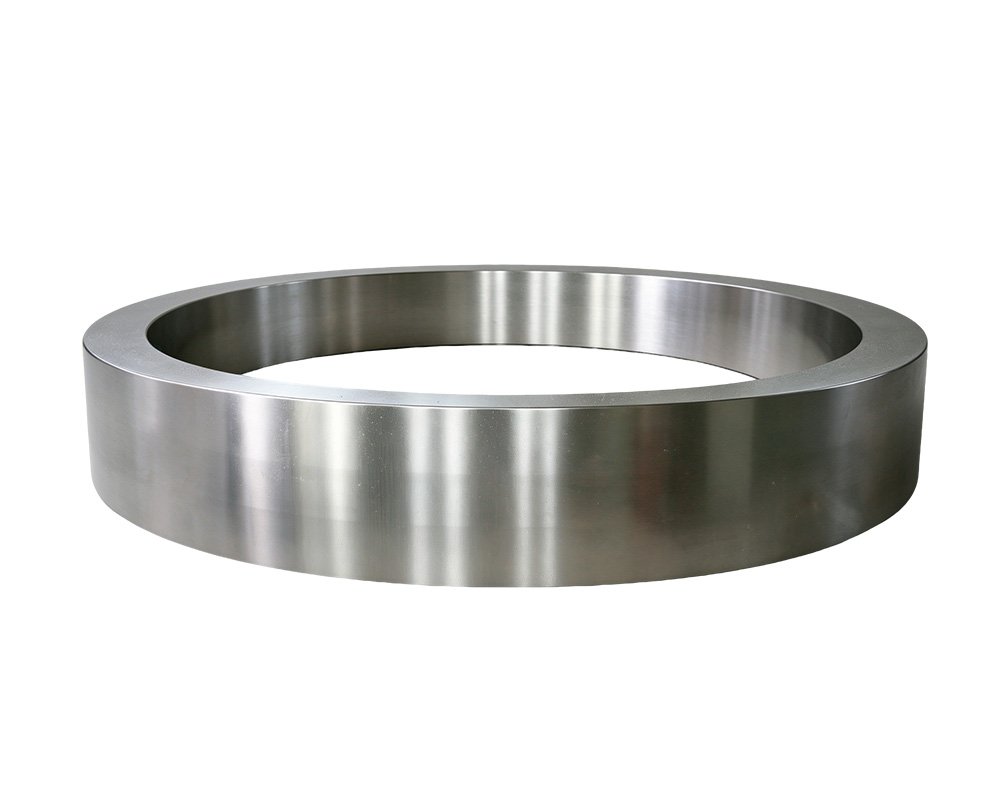
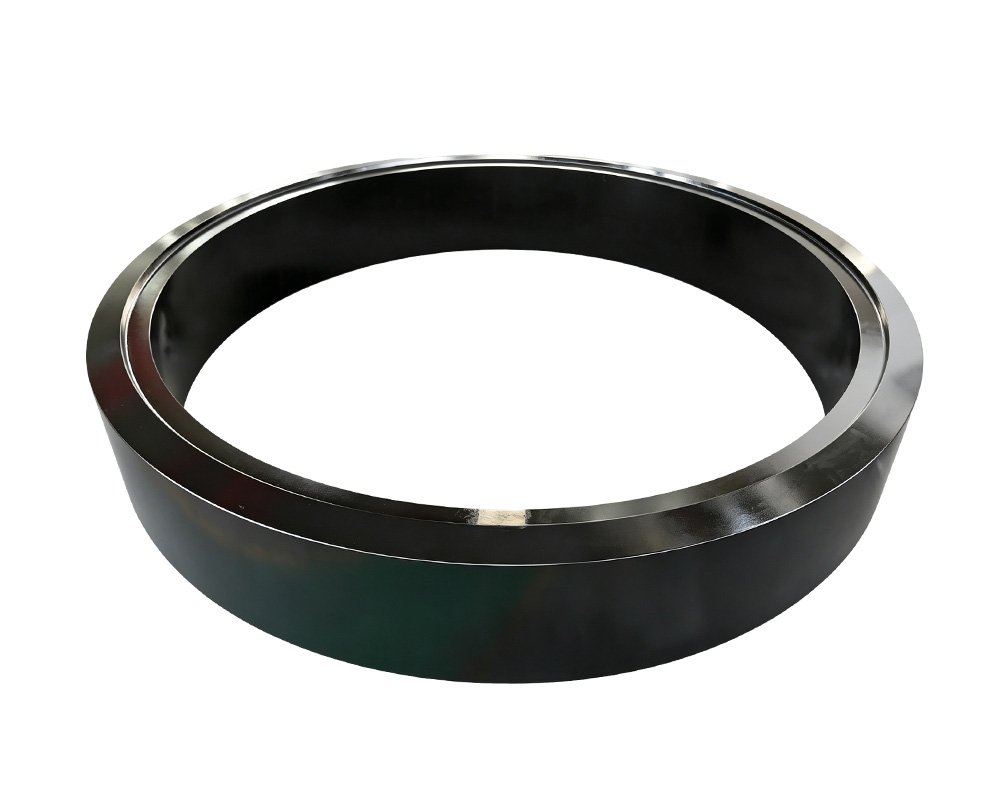
Rotary Kiln Tyre
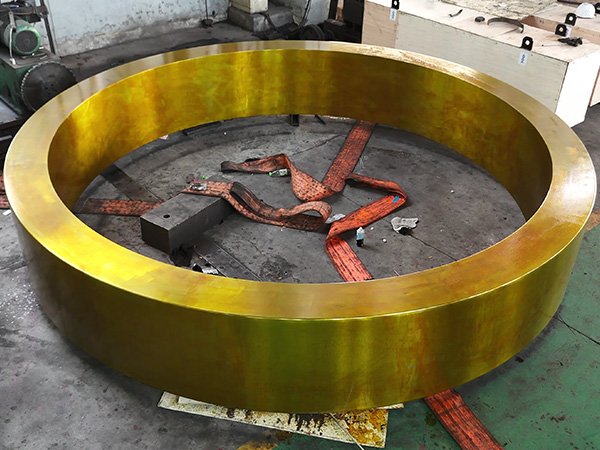
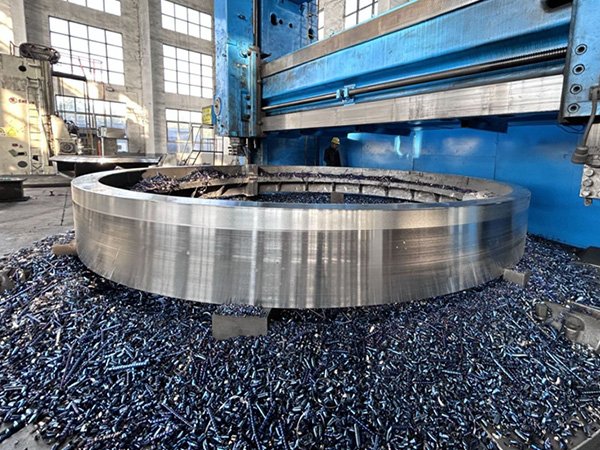
The rotary kiln tyre, also known as the rolling ring is a critical component within rotary kiln systems, serving as an integral part of the support and transmission mechanism. BOPENG kiln tyres are primarily manufactured from cast steel, these tyres are also occasionally produced using forging processes. The tyre is a high-strength, durable annular component that rests around the outside of the rotary kiln drum, and its primary function is to provide structural support to the rotating kiln shell. It ensures the precise alignment and smooth rotation of the kiln by uniformly distributing the weight of the kiln.
The casting rotary kiln tyre is widely applied in production equipment across various industries, including cement, metallurgy, and chemical manufacturing. To extend its service life, the riding ring requires periodic maintenance procedures, such as high-temperature lubrication and crack repair. The employing specialized techniques that include graphite lubrication systems and laser welding repair.
Technical Specifications
|
Parameter |
Description |
|---|---|
|
Material |
ZG310-570, ZG35CrMo, ZG35Mn, and other customized material |
|
Weight |
>1 ton |
|
Diameter |
Common sizes, depending on the kiln size |
|
Hardness |
Typically 280 to 320 HB (Brinell Hardness) |
|
Surface Treatment |
Shot blasting, heat treatment for improved fatigue resistance |
|
Temperature Resistance |
Able to withstand up to 500°C – 1000°C depending on material |
|
Heat Treatment |
Annealing/Normalizing/Quenching/Tempering |
Main Categories of Kiln Tyre
Based on the manufacturing process
|
Cast |
Forged |
|---|---|
|
Cast tyres are made of cast steel and represent the primary method currently adopted by manufacturers. BOPENG utilizing advanced modern casting technology, combining metal forming technology with radial and axial ring rolling technology, producing high-quality, high-precision, and high-mechanical-strength cast steel tyres for rotary kilns. |
Forged tyres are made of forged steel and feature a solid cross-sectional structure; their advantages include high quality, low thermal stress, and a relatively long service life. However, they suffer from disadvantages such as slow heat dissipation, lower rigidity, complex manufacturing processes, and higher production costs, resulting in limited market application. |
Based on cross-sectional shape
|
Solid Rectangular Tyres |
Hollow Box-section Tyres |
|---|---|
|
Solid rectangular tyres feature a solid rectangular cross-section. |
Hollow box-section tyres feature a hollow, box-like cross-section. |
Working Principle of Rotary Kiln Tyre
The rotary kiln tyre is a critical load-bearing and force-transmitting component within rotary kiln equipment.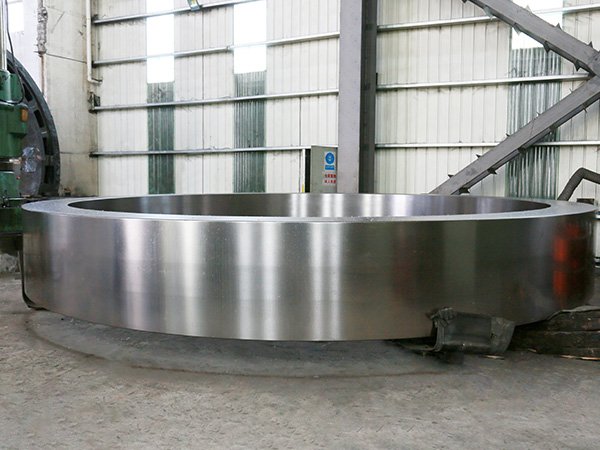
Support and Force Transmission
The kiln tyres fitted around the rotary kiln shell and bears the entire weight of the shell, refractory lining, process materials, and internal components. It transmits these loads to the underlying support roller assemblies, which in turn transfer the forces to the foundation structure, thereby ensuring the stable rotation of the kiln body.
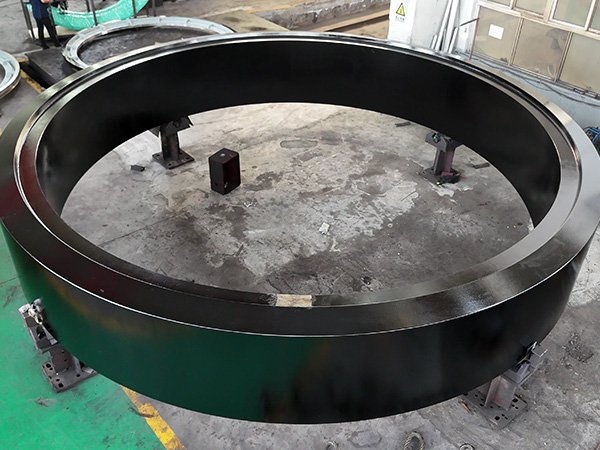
Enhancing Shell Rigidity
The kiln tyre significantly enhances the radial rigidity of the kiln shell under conditions of high temperature and heavy load through its rectangular or box-section structural design. This will minimize elliptical deformation of the shell, thereby protecting the internal refractory bricks from excessive compressive stress that could lead to dislodgment.
Accommodating Thermal Expansion
The kiln tyre is installed onto the shell’s backing plates using a “floating fit” method. A clearance of 1–2 mm is maintained between the backing plates and the tyre, allowing the kiln body to expand freely as temperatures rise. This prevents the generation of kiln tyre or kiln shell by excessive thermal stresses.
Promoting Uniform Wear
Facilitated by a hydraulic thrust roller system, the kiln body undergoes periodic axial oscillation (with a stroke of approximately 60 mm). This ensures uniform contact and wear across the entire width of both the rotary kiln tyre and the support rollers, thereby extending the service life of these critical components.
Quality Control and Inspection Process
To ensure the quality and longevity of rotary kiln tyres, BOPENG requires a rigorous inspection and quality control process.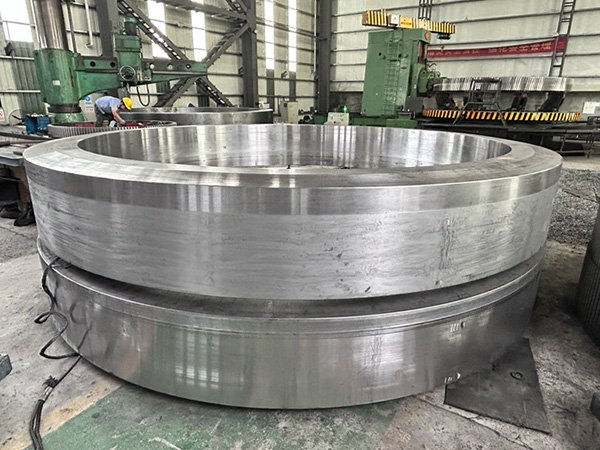
Why choose BOPENG?
20 Years of Professional Steel Casting Manufacturing Strength
BOPENG possesses 20 years of experience in the production of cast steel spare parts, and continuously upgrading our manufacturing techniques and optimizing our service systems. We employ advanced manufacturing processes to produce large steel casting products that are high in strength, wear-resistant, and have a long service life. We have a team of experienced engineers who use the latest modeling software to design and manufacture the steel cast parts to your specifications.
Strict Full-Process Quality Assurance & ISO Certification
We consistently prioritize the procurement of high-quality steel raw materials, establishing close cooperative relationships with premium suppliers. Furthermore, we conduct a comprehensive series of compositional analyses on these materials to ensure they meet all requisite quality standards. Concurrently, our quality control measures are integrated throughout the entire production lifecycle—from mold making and casting to precision finishing—with dedicated quality inspectors overseeing product quality at every stage. BOPENG equipped with a diverse array of product testing instruments, and all our products have successfully obtained ISO quality system certification.
Round-the-Clock All-Round Service & Global Customer Partnerships
BOPENG offers 24/7 online consultation services. Our professional international trade team is dedicated to assisting you with any issues that may arise during the cross-border procurement process, while our technical team stands ready to help you resolve any challenges encountered during product design, installation, and operation. Relying on high-quality cast steel products and a comprehensive service system, BOPENG has earned widespread recognition from clients worldwide, establishing cooperative relationships with renowned enterprises such as Mesto, SMS, POSCO, and Lafarge.
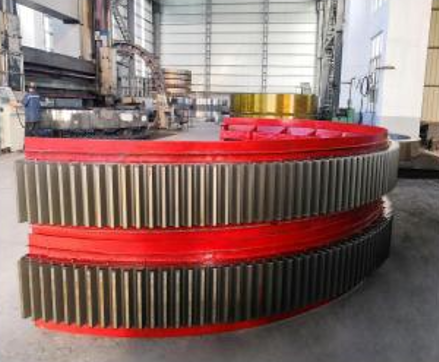
BOPENG’s Solution for Cast Steel Products
BOPENG support fully customized large casting steel products in widely applications, including building material industry, metallurgical engineering, and mining industry. We supply one-stop solution from drawings to finished products.
FAQ
Use this space to provide your website visitors with a brief description of what to expect before clicking on a section title.