
Rolling Mill Stand
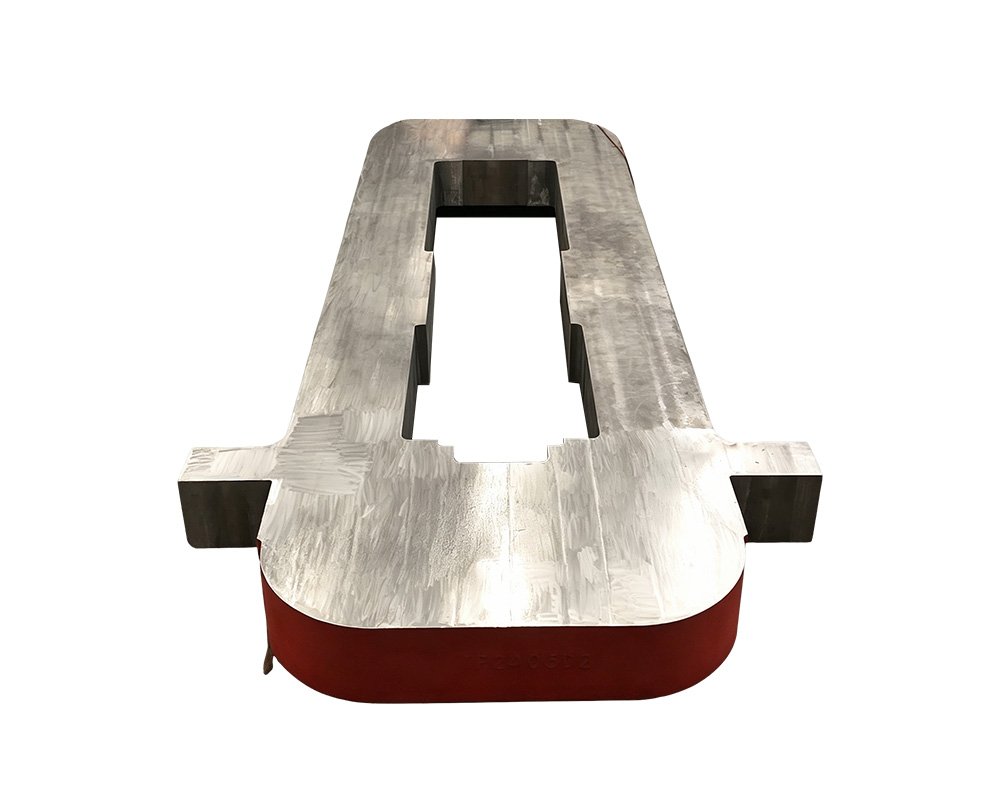
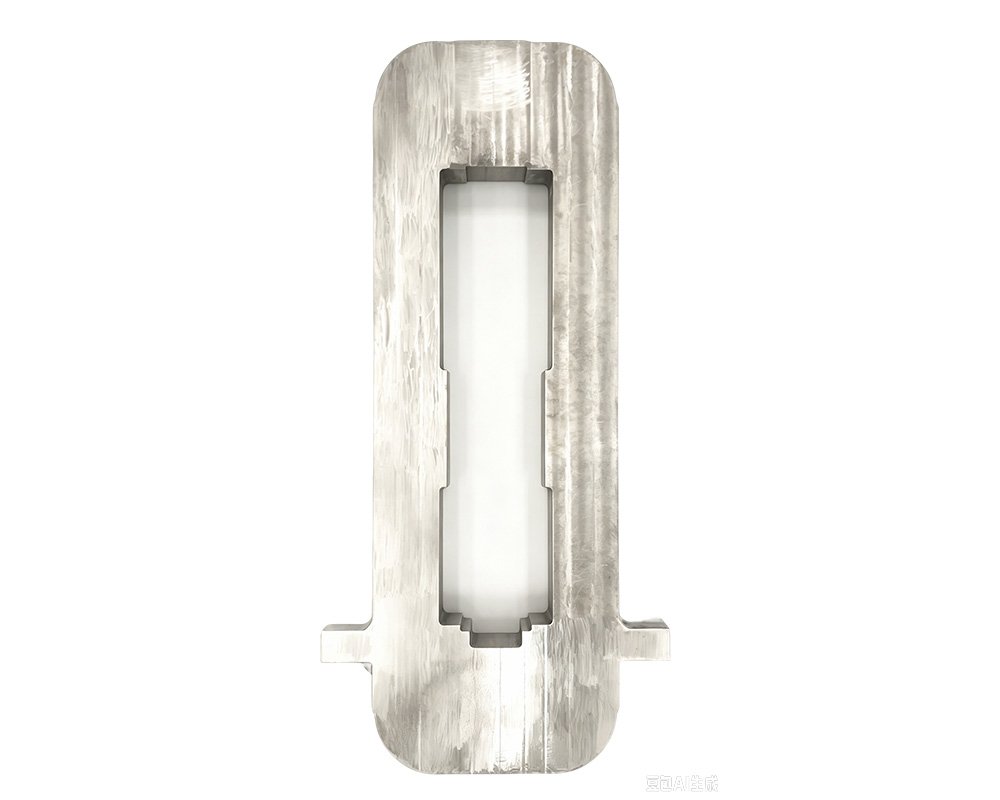
Rolling Mill Stand
Rolling Mill Housing, also called Rolling Mill Stand, Mill Frame, Mill Housing Frame, or Rolling Mill Stand Housing, is one of the core load-bearing components in hot rolling mills, cold rolling mills, section mills, bar mills, wire rod mills, plate mills, and strip mills. It accommodates all core components of the rolling mill, including rolls, bearings, bearing chocks, and roll adjustment devices. Its main function is to support rolls, bearing chocks, screw-down systems, and transmission systems while absorbing enormous rolling forces generated during steel rolling operations.
Vertical rolling mill stands are usually made of high-quality cast steel or welded steel structure, which need to bear all the rolling force during the rolling process, and transmit the load to the foundation. Whether it is a hot rolling production line for steel, a cold rolling mill, or a non-ferrous metal rolling production line, high-performance rolling mill housing is the core guarantee for the stable operation of the entire production line.
BOPENG specializes in manufacturing large cast steel vertical rolling mill housings of various structures and tonnages with high strength, high rigidity, excellent fatigue resistance, and superior dimensional stability for steel, metallurgy, mining, and heavy industrial applications.
Main Function of Rolling Mill Stands
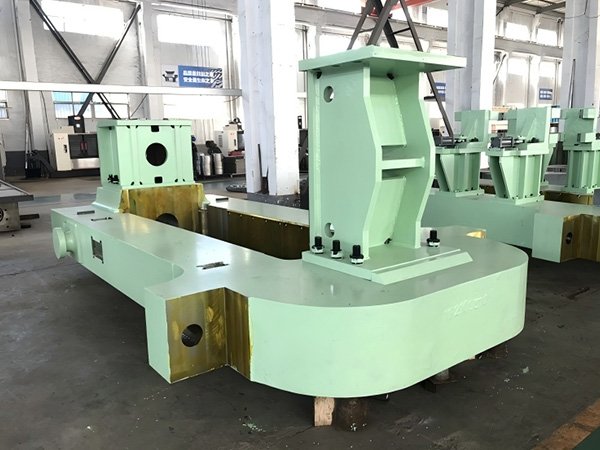
Rolling Mill Housing Structure
A rolling mill housing is the massive structural frame that supports the rolling rolls and transmits rolling force to the mill foundation during metal deformation. It commonly consists of window frame, posts/columns, cross beam, screw-down device seat, bearing chock guide surfaces, and base support section.BOPENG rolling mill stands can be divided into different structural types:
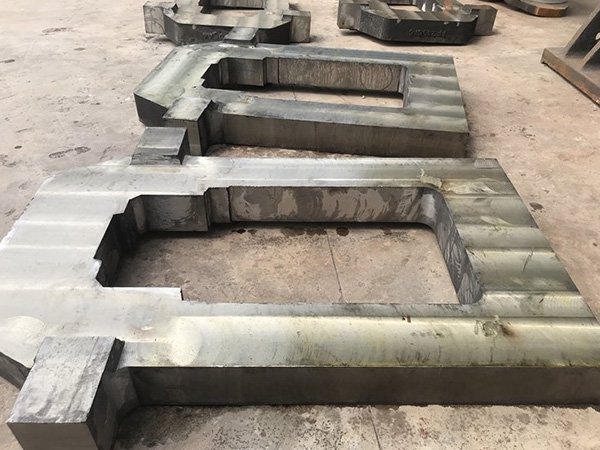
Open Type Rolling Mill Housing
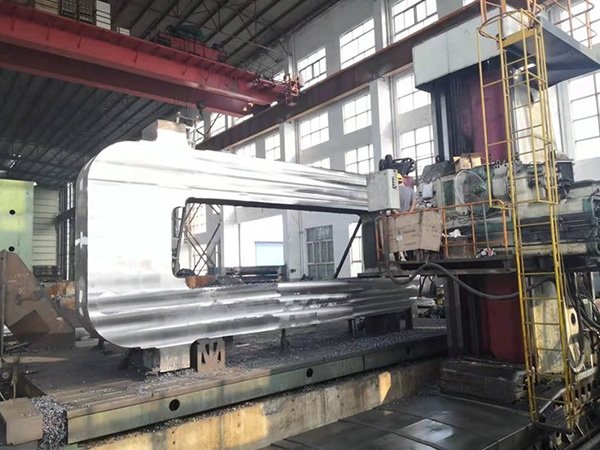
Also called closed frame rolling mill stand, it is an integral closed frame structure with high overall rigidity, good stability, and can withstand large rolling force, suitable for heavy-duty roughing mills and finishing mills. This structure has small deformation during rolling, which can ensure high rolling accuracy, and is the most widely used structure in modern large-scale production lines.
Closed Split Type Housing
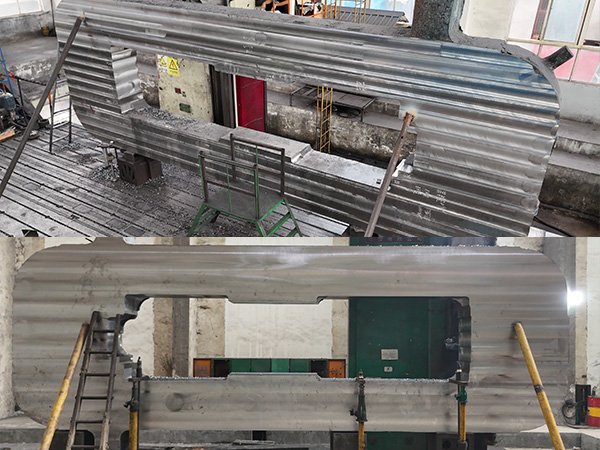
A kind of split-type rolling mill housing, composed of two side walls separated, upper and lower beams, connected into a whole by pre-stressed bolts. Split rolling mill housing, with a middle spacer structure. This structure is easy to disassemble, which is convenient for roll changing and equipment maintenance, and is suitable for modern rolling mills that require frequent roll changing.
Half Housing Pre-stressed Structure
A kind of high-precision pre-stressed rolling mill housing, through the pre-stressed design of the pull rod, can offset part of the deformation when rolling, improve the overall rigidity of the rolling mill, and can control the accuracy of the head and tail of the rolled piece within ±0.06mm, which is suitable for high-precision finishing rolling occasions.
Materials of BOPENG Rolling Mill Stands
BOPENG selects high-quality raw materials according to different working conditions and load requirements, to ensure that the rolling mill housing has sufficient strength, toughness, and fatigue resistance.For the manufacturing of rolling mill housings, we strictly control the content of impurities: Sulfur ≤ 0.015%, phosphorus ≤ 0.025%, far lower than the national standard limit, effectively avoiding the brittleness caused by impurities, and improving the toughness and fatigue resistance of the material.
|
Material Grade |
Main Performance |
Applicable Scenarios |
|---|---|---|
|
ZG230-450 (ZG25) |
Good casting performance, good welding performance, good plasticity and toughness, moderate strength, suitable for medium load structural parts |
Medium and small rolling mill housings, general working conditions |
|
ZG270-500 (ZG35) |
High strength, good toughness and plasticity, good machinability |
Medium and heavy rolling mill housings are the most commonly used material for general rolling mill housings |
|
ZG310-570 (ZG45) |
Higher strength, good wear resistance, suitable for heavy load working conditions |
Heavy-duty rolling mill housings, roughing mill housings under large impact load |
|
ZG35CrMo |
High strength, excellent toughness, good hardenability, good impact fatigue resistance, yield strength ≥ 510MPa, tensile strength ≥ 700MPa |
Extra-heavy rolling mill housings, large hot rolling mills, and high-load working conditions |
|
ZG42CrMo |
Ultra-high strength, excellent comprehensive mechanical properties, good low temperature impact toughness, can meet the demand of extra-heavy loads |
Large heavy-duty rolling mill housings, roughing mill housings for large section steel, and strip mill housings |
Mechanical Properties
|
Property |
Typical Value |
|---|---|
|
Tensile Strength |
500–750 MPa |
|
Yield Strength |
280–450 MPa |
|
Elongation |
≥18% |
|
Impact Toughness |
≥35 J |
|
Hardness |
HB180–260 |
Advantages of BOPENG Cast Steel Rolling Mill Housing
As a professional cast steel parts manufacturer, BOPENG’s rolling mill stand has the following outstanding advantages:High Rigidity and High Precision, Improve Rolling Quality
– High-quality alloy cast steel material, optimized structure design through finite element analysis, the overall rigidity is high, and the elastic deformation during rolling is small.
– Pre-stressed rolling mill housing can effectively offset the rolling deformation, the overall stiffness coefficient is increased by more than 30%, effectively improving the dimensional accuracy of rolled products, and the head and tail accuracy deviation can be controlled within ±0.06mm, meeting the requirements of high precision rolling.
– Strictly control the processing accuracy, the parallelism and position tolerance of each matching surface meet high standards, ensuring the assembly accuracy, and ensuring the stable operation of the rolling mill.
High Strength and High Toughness, Long Service Life
– Strictly control the impurity content of the material, sulfur control ≤ 0.015%, phosphorus ≤ 0.025%, ensure that the material has high strength and good impact toughness.
– After reasonable heat treatment, the material structure is uniform, the fatigue resistance is good, can withstand long-term alternating impact load; the service life is 1.5-2 times that of ordinary products.
– 100% non-destructive testing, to ensure that there are no harmful internal defects, and to avoid the hidden danger of cracking during use.
Full Customization, Adapt to Various Working Conditions
– We can produce according to customer drawings, any size within 200 tons can be customized.
– Can be designed according to your rolling force, rolling process, and other working conditions, and recommend the most suitable material and structure.
– We can provide open type, closed split type, pre-stressed type, pre-stressed short stress line, and other structural types to meet the needs of different production lines.
Complete Production Capacity, On-time Delivery
– We have large-scale production equipment, from casting, heat treatment, processing, and testing, a complete production line, which can meet the production demand of a large extra-heavy rolling mill housing.
– Standard production management, control the production cycle reasonably, and ensure on-time delivery.
– Professional after-sales service, providing technical guidance for installation and commissioning.
Cost Advantage, Save Your Procurement Cost
– Optimized design through finite element analysis, under the premise of ensuring performance, reasonably reduces the weight of the product, reduce the procurement cost.
– One-stop production from smelting, casting, processing, and testing reduces intermediate links, competitive price.
– Long service life reduces the frequency of replacement and reduces the overall operating cost of the production line.
BOPENG’s Solution for Cast Steel Products
BOPENG support fully customized large casting steel products in widely applications, including building material industry, metallurgical engineering, and mining industry. We supply one-stop solution from drawings to finished products.
FAQ
Use this space to provide your website visitors with a brief description of what to expect before clicking on a section title.